Open Banterr in the room you're in. See who's around you, what you actually have in common with them, and who's worth saying hi to — before you ever open your mouth.




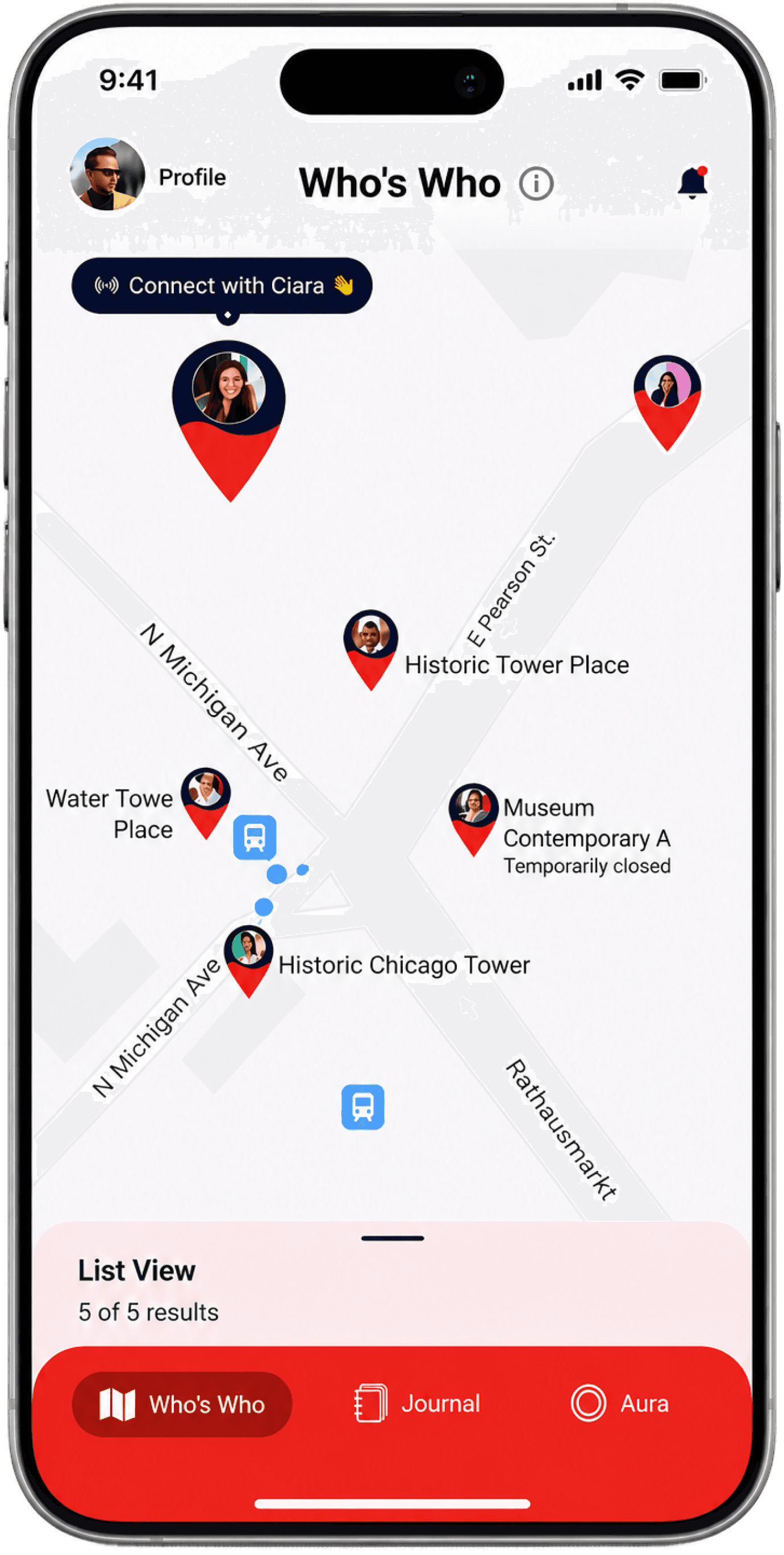


Designed to be opened in the room and put away. Not designed to keep you scrolling.
Open the app.
Banterr sees you're in a venue with other Banterr users. The map fills with the people actually around you.
Tap a person.
See their profile and the specific things you have in common — same hometown, same shows, same drink order.
Walk over.
You already have something to talk about. No DMs, no swipes — the conversation happens in person.

"I'm at the bar with my coworkers and someone two stools down looks interesting. But I don't know what to say."
Open Banterr. You both went to summer camp in Wisconsin. Now you have an opener.

"I'm at a conference of eight hundred people and I know exactly two of them."
Open Banterr. You and three nearby people all worked at the same agency. Coffee line just got interesting.

"I'm at my friend's wedding and everyone is a stranger except the couple."
Open Banterr. Half the room is from the same neighborhood as you. The table-seven small talk practically writes itself.

"I'm at a coffee shop and the person at the next table is reading the book on my nightstand."
Open Banterr. You both love Sally Rooney and Italian neorealism. Say hi.
Three things make Who's Who fundamentally different from anything in your phone right now.
It's about the room you're in.
Not a profile pool. Not your feed. The actual people sharing your physical space, right now.
You see what you share.
No compatibility percentage, no algorithm score. Just real, specific things you actually have in common.
The conversation is in person.
No DMs. No matching. You walk over and say hi. Banterr's job ends there.